Glowing worlds
What happens when a new star forms over millions of years, only to fail to ignite in the end? Eduardo Martín describes the dramatic events behind the discovery of the first brown dwarf in the Pleiades and explains what are coffee dwarfs. He explains their connection with dark matter and life in the universe.
04. May 2026

Listen now
What happens when a new star is born over millions of years, but in the end fails to ignite? Eduardo Martín explains why this happens, describes the turbulent events behind the scenes of the discovery of the first brown dwarf in the Pleiades, and takes us into the world of these cold objects. What are coffee dwarfs? How are they connected to dark matter and life in the universe? And what role does the Euclid space telescope play in all this? Listen to the episode.
Who are our listeners? We are collecting responses at https://forms.gle/JPyJta7xFCVvhYqG6!
Support the podcast on https://ko-fi.com/temnastranlune!
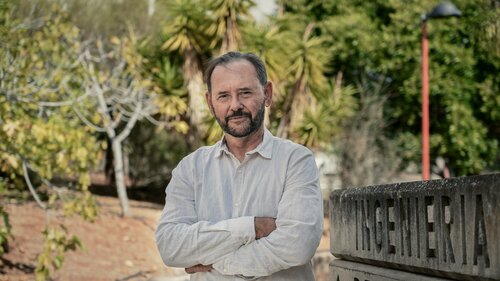
Cover image: Eduardo Martín is a professor at the Institute of Astrophysics of the Canary Islands. Photo: IAC
—
Notes |
- Read the interview
- Discovery of the first brown dwarf Teide 1
- Cool neighbours (guest Tom Bickle)
- Project Substellar
- Euclid Space Telescope
Observations |
- (book) G. Cannat, “Glej jih, zvezde! Najlepši prizori na nebu v letu 2025”
- ISS passes: on the website Vesolje.net, on the website Heavens-Above
- Space weather on Space Weather.com
- Aurora Borealis (Slovenian page): https://severnisij.si/
- Phone applications: Stellarium, SkySafari, SkyPortal, Aurora (for Aurora Borealis)
- Desktop planetarium: Stellarium
----
Logo: (modified) Moon image, credit: NASA's Scientific Visualization Studio
Audio intermezzo: NASA/Hubble/SYSTEM Sounds (Matt Russo, Andrew Santaguida)
Music: Peli (Opravičujemo se za vse nevšečnosti)
Portal v vesolje podcast: Spotify, author: Jure Japelj
Podcast Temna stran Lune is part of the Zavoda Cosmolab activity network: https://www.cosmolab.si