Astronomer at a premier observatories
Nada Ihanec collaborates on the development of new instruments at the observatory in the Canary Islands, observes and researches supermassive black holes and transients, and is also learning how to grow bananas.
05. Jan 2026

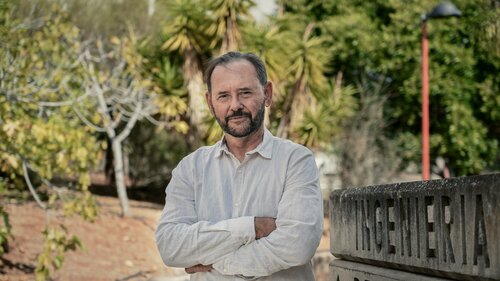
Nada Ihanec is an astrophysicist and researcher at the Roque de los Muchachos Observatory on La Palma in the Canary Islands, where she observes with the Isaac Newton Group of Telescopes. She researches supermassive black holes, observes transients, and is learning how to grow bananas.
When did your interest in astronomy begin, and who inspired you?
Ever since I was little, I loved observing the sky, the stars, and shooting stars. However, I don't remember any specific moment when I told myself that I was particularly interested in astronomy and that I wanted to pursue it professionally. In elementary school, I did presentations on space exploration and the space race during the Cold War. I thought that was super and interesting, but I never imagined that I would work in astronomy professionally. When I had to choose a faculty at the end of high school, nothing interested me extraordinarily. I knew that humanities really didn't suit me and I didn't like them. Mathematics and physics were my favorites, but at the same time, I knew that I am not a theoretician, and that I much prefer dealing with practical work and experiments. That is why I decided to study physics at the Faculty of Mathematics and Physics in Ljubljana. In the first year, we had to choose a study track that we wanted to pursue. One of them was astronomy, and I told myself, okay, I'll try it to see if it's for me. In the end, it started to interest me immensely. It was truly fascinating. When I later continued my studies at the master's level at the Faculty of Natural Sciences of the University of Nova Gorica, I chose the astrophysics track again. That was one of my better decisions, so I then continued with astronomy into my PhD, which I am currently working on. Astronomy therefore did not pull me in through any specific event, but rather I started pursuing it through a combination of coincidences and good decisions.
It's a nice story. You probably didn't imagine in your childhood that you would be working in the Canary Islands.
No, I really didn't. I didn't even know that an observatory existed on La Palma at all, that it is one of the largest observatories in the northern hemisphere, and even less that I would ever work here.
How did your path from studying in Slovenia lead you to La Palma?
I first came to La Palma in 2021 during my doctoral studies. After finishing my master's degree in Slovenia, I decided to continue with my PhD at the University of Warsaw in Poland. At the end of 2020, the Isaac Newton Group of Telescopes on La Palma announced an opening for a student internship. I applied for the position, which is otherwise offered every year. In 2021, I was accepted and traveled to La Palma for eleven months, where I worked as a student observer. At that time, I observed with the Isaac Newton Telescope, which has a 2.54-meter primary mirror. Since it was during the pandemic, other astronomers were not allowed to come to the observatory to carry out their own observations. As a result, we students worked every single night of the year. Over the course of eleven months, I accumulated around forty observing nights in total. That was when I realized that I enjoyed this work immensely and that it was truly something I wanted to do for the rest of my life. I knew then that I wanted to come back. Sometimes in a job interview, they ask you where you see yourself in five years. After those eleven months, I knew I wanted to live on La Palma, work on telescopes, own a banana plantation, and run a diving school [laughter]. However, I never imagined it would happen as quickly as it did.
Then I moved to Chile, where I completed a student internship at the European Southern Observatory (ESO). Unlike La Palma, where I observed with telescopes, there I spent a year working on projects. After returning to Warsaw to finish my PhD, my funding was soon running out. Right around that time, a position for a telescope operator was opened at the Isaac Newton Group of Telescopes. I didn't get that specific job, but two months later they contacted me and offered me my current job and position as an observer, or astronomer. In the end, it turned out that this role suits me even better than the one I had originally applied for. Once again, everything worked out brilliantly. I guess I'm quite lucky.
You also research supermassive black holes. Today, they are also being discovered in the early universe, as our guest described in the previous episode. But you observe nearby giant black holes. How do you do that?
I devote most of my research time to supermassive black holes located at the centers of all galaxies, both nearby and distant, including our own. If I'm not mistaken, scientists have managed to capture images of only two such supermassive black holes so far. In 2019, the Event Horizon Telescope captured the first image in the galaxy M87, and three years later, the image of the black hole in our own Galaxy. These are direct observations, whereas I deal with indirect observations. Galaxies are so distant that we cannot see into their centers, which is why I observe them with the help of transients.
Not much is generally known about transients. In astronomy, this is a transient phenomenon that appears in space for a short time. It suddenly becomes brighter and stays bright for a longer period. They have varying durations. Fast transients, for example, last a few minutes or hours, while longer ones last days, weeks, months, and even years. Afterwards, they fade or disappear. The most famous such phenomena are, for example, supernovae—powerful explosions that occur upon the death of massive stars. The transients that I study are located in the centers of other galaxies and arise due to the presence of a supermassive black hole. A typical such phenomenon is a tidal disruption event, which occurs if a star gets too close to a supermassive black hole. Tidal forces and a truly strong gravitational pull tear the star apart. We also say that this is death by spaghettification, as the star turns into a spaghetti-like strand. Part of this is swallowed by the black hole, around which the spaghetti wraps in the form of an accretion disk. The result is an extremely powerful explosion and flare that lasts for months, and sometimes even several years. These are very powerful and rare phenomena. If we observe 10,000 galaxies for a year, we will notice such a phenomenon in only one of them. They are difficult to find, which is why every such event is valuable, as it tells us a lot about the galaxy, its black hole, and also the cause behind it.
As an interesting fact, I should mention that we search for transients with the help of photometric observations. Both on Earth and in space, we have telescopes that observe the same parts of the sky every day and measure the brightness of objects in space. With the help of these measurements, we identify objects whose emission has changed and that have become brighter. If such a source is located at the center of a galaxy, we also need spectroscopy for classification in addition to photometry. Just as a prism splits sunlight into a rainbow, we obtain the spectrum of an object in a very similar way. This tells us even more information about the object: we can determine the distance to the galaxy, the matter and elements located within it, what the cause of the transient was, how much energy was released, what the mass of the black hole is, and the like. This is truly a huge source of information.
Why are supermassive black holes so very interesting?
These are some of the largest and most massive objects in the universe. In my opinion, they are among the main builders and factors in the formation and evolution of galaxies, as they are located at the center of all galaxies. I believe that understanding black holes and their evolution allows for a better understanding of structures within galaxies and the evolution of these galaxies, including our own. Because these are such massive objects, the most energetic phenomena in the universe often occur around them. They are a laboratory for extreme gravity and extreme magnetic fields. Active galaxies—those that have a black hole with an accretion disk at their center (ours does not)—reveal the most extreme gravity and the most extreme magnetic fields to us. By studying these phenomena, we test the general theory of relativity and conduct numerous other studies related, for example, to dark matter, quantum gravity, and the like.
I don't personally work on that myself; my work is observational astrophysics. I always say that I like to discover and observe these objects in every possible way, and that then helps theorists test their theories. Black holes are truly a super source of information.
Let's return to the data you need to understand supermassive black holes. In your work, you use observations from ground-based and space telescopes. Which telescopes have you already observed with, and where in the world has this work taken you?
One of my favorite aspects of my work is the travel associated with observations. I worked a lot with the Gaia space telescope, which completed its mission in January 2025. Gaia was, and in a way still is, the most important catalog of transient objects during my doctoral studies. I was part of a group of about fifteen people that checked Gaia's data every day. Gaia sent data down to Earth daily. We checked them together and voted on whether a transient was real or not, meaning whether it was of astronomical origin. We then published the list of real transients on a website for the entire astronomical community. Thus, I am one of those fifteen people who are discoverers of thousands of new transients. Gaia discovered a total of 25,000 of them. I feel that I am one of the people who discovered more than half of them.
While I could do this from home, in many cases I had to travel to telescopes. I already observed during my undergraduate studies in Ljubljana, specifically with the Vega telescope on Golovec. During my master's degree, I went to Loiano in Italy, where I observed with a 1.5-meter telescope, as well as to Greece near Athens. There I observed with the Aristarchos telescope, which is a bit larger, at 2.3 meters. It is located in the middle of nowhere at the top of a ski resort, where there were a lot of sheep. I always remember that. Right at the beginning of my PhD, I went to the La Silla Observatory in Chile, which is part of the European Southern Observatory. There I worked and observed with the New Technology Telescope, which was my largest up to that point (3.58 meters). Meanwhile, I visited the Paranal Observatory for a total of fourteen days, where I observed with two 8.2-meter telescopes. Then I worked for eleven months with the telescope I mentioned earlier: the Isaac Newton Telescope on La Palma, and now I have been observing for two years with the William Herschel Telescope, which has a diameter of 4.2 meters. I have observed in many places. This makes me very happy, and I truly enjoy it.
Dreamy. Many listeners will envy you.
All the trips were work-related and funded through my job and PhD. If you are awarded observing time at the European Southern Observatory, ESO covers your travel expenses and accommodation. At Paranal, all the telescopes are in the middle of nowhere, and in the residence where we sleep during the day, they have a swimming pool. So at an altitude of 2,500 meters, you can enjoy swimming.
How come observatories are in remote locations, in the middle of nowhere? You mentioned nature and a flock of sheep near the observatory. Wouldn't it be easier if they were built closer to cities?
The Loiano Observatory is in the middle of a forest. I noticed wolf paw prints the size of my palm there, which I didn't like very much. On the other hand, the sheep at Aristarchos won't do anything to you. Otherwise, all major observatories, such as Paranal and our Roque de los Muchachos Observatory, are located in very remote places. There is very little light pollution there, which is one of the most important factors for observatories. In addition, the location must have a very stable atmosphere throughout its entire altitude, from the telescope all the way to space.
Light pollution truly interferes with observations. For example, my objects are very faint. When we talk about the brightness of objects in astronomy, we talk in magnitudes. Our eye can still detect objects down to the 6th magnitude, whereas the objects I observe have a magnitude of 18 or 19. This means they are approximately 100,000 to 200,000 times fainter than those that our naked eye can still see. Therefore, in the presence of light pollution, as well as during a full Moon, the background is too bright and my object cannot be seen at all. That is therefore one of the main reasons why all telescopes are in such truly remote locations.
"At La Palma, we have a special law for protecting the dark sky. After ten o'clock at night, all streetlights and the lights in restaurants and shops across the entire island are dimmed. This leaves the entire island in darkness so that the observatory can operate normally. I find this fascinating: at night, we really don't need bright shop windows while everyone is sleeping. It would be great if this were practiced elsewhere too."
How does your work unfold, and what does your typical day at the observatory look like?
I do two different types of work. The first is nighttime observations with the telescope, which accounts for about half of my time. An observing night averages fourteen hours long and counts as about two workdays. I observe for 5 or 6 nights a month, and then I do another 10 workdays in the office. The remaining days of the month are free.
In addition, right now the most time-consuming part of my work is working on the WEAVE instrument, which is mounted on the William Herschel Telescope. WEAVE is a very advanced spectrograph and allows for three different observing modes. One of them, which is also one of the most demanding and takes up the most time in the afternoon, is called MOS (Multi-Object Spectrograph). It consists of a thousand optical fibers that two robots individually position onto an observing plate. These fibers must be placed in exact locations so that the light from stars and galaxies falls directly onto them. All of this happens in the afternoon and then throughout the entire observing night. We are currently in the commissioning phase. This means we are testing the instrument and checking whether everything works as intended in the designs.
Half of my time is thus spent at the telescope observing, while the rest of the time I either work on my own research or help with data analysis and instrument testing. What I am currently involved in is something special and different from what I was used to before. I have already learned a lot about the instrument, and even more about telescopes, so this type of work is truly interesting.
With all the experience you have with various telescopes and testing different instruments—since they are constantly changing—you are continually refining your expertise in this field. You certainly never run out of work.
That is true. Every telescope I've observed with has had a different instrument, whether for spectroscopy or photometry. Each one was different, and every single time I had to learn anew how it works. But WEAVE is an upgrade of everything I've learned so far. While in the past I acquired one spectrum per hour, now I can get 900 of them simultaneously.
Does a typical day of an astronomer differ from one observatory to another?
I can compare the student internship in Chile and on La Palma. On La Palma, students can apply to work on two telescopes: the Isaac Newton Group of Telescopes, where I also work, and the Nordic Optical Telescope. In both cases, students come here and observe independently.
In Chile, however, the main type of my work was research-focused. I dealt with tidal disruption events and transients in the centers of galaxies, and I also collaborated with staff at the European Southern Observatory. In addition, I visited the Paranal Observatory twice, where I wasn't in charge of observations, but rather helped with instrumental projects. I learned the most about instruments there, but I didn't perform the observations myself, so the experience was different.
Since observations are much closer to my heart, I liked the work on La Palma better, even though the experience in Chile was also unforgettable. I made many contacts and acquaintances, the way of working was excellent, and above all, I gained a lot of experience.
How do satellites and satellite constellations affect astronomical observations, and how is this problem being solved?
This is one of our biggest problems besides the already mentioned light pollution. Megaconstellations present a problem primarily for photometric observations and for telescopes with a large field of view. Satellites have already ruined many of my observations. I remember a very important observation when we were searching for the optical counterpart, meaning the source of light in optical wavelengths. It occurred during the merger of two neutron stars or a neutron star and a black hole. During the observation, satellites flew across the field of view and ruined the entire image. In the future, photometric searches for transients will therefore be problematic.
In the field of spectroscopy, however, the damage is not as great because the field of view is much smaller. I myself have not yet seen ruined spectroscopic data.
Transients are one-off and non-repeatable.
That is true. They occur on various timescales. For example, fast radio bursts last less than a day and never repeat. Megaconstellations are therefore a real problem. I have already listened to many lectures on this topic. When staff from companies that manufacture these satellites visited us, they assured us that they are working on it, but I haven't seen a good result yet. However, we must coexist with technological development, and I hope a solution will be found soon.
Let's return to happier topics. What do you like most about your work, and what is the hardest part?
As funny as it sounds, the part that I like the most is at the same time the part I like the least. What I like most is the opportunity to travel, work with different telescopes, and meet people from different cultural and professional backgrounds. That is definitely one of the best sides of this work.
As for scientific research, what fascinates me most about transients is that they are unique phenomena. Once a transient is discovered, I point the telescope at that area and am probably the first one to observe it. I take a spectrum, process it, and analyze the data. These tell me what the nature of the transient is—for example, different types of supernovae or a tidal disruption of a star, what its chemical composition is, and how far away it occurred. These are distances spanning millions or billions of light years, which means that in this way I am looking into the past. This part is truly fascinating to me.
Since these events can happen at any time, they naturally happen over weekends, at night while I am sleeping, or during holidays. My work therefore takes place 365 days a year. If a transient happens while I am on vacation, I immediately start working. I won't say: "Ah, I'll skip this one, I'll observe the next one." That is the negative side of my work.
Observational work often lasts fourteen hours a night, especially now when we are developing a new instrument and problems can arise. During that time, I must be completely concentrated. After the night, I go to sleep, and ten hours later I start working again. Sometimes the nights are very exhausting, especially during weather changes, when we have to be even more careful not to damage the instruments or telescopes.
On the other hand, I have visited observatories in exceptional locations around the world. The work is therefore very positive at the same time, but sometimes also exhausting and demanding.
You have gained a tremendous amount of observing experience. Do you have any special story, anecdote, or adventure that happened to you during observations?
I have, of course, and even two of them. The first one happened in 2021 when I was working on La Palma. At that time, a volcano erupted on the island.
"I never thought I would ever see an active volcano, let alone live near one. I spent a month on the island during the eruption. That period was something incredible: seeing the exceptionally beautiful nature while at the same time the damage caused by the volcano. At the observatory, we measured the concentration of dust and gases. During my last observing night, I was training new students, but we had to interrupt our work due to an evacuation—a sulfur cloud had drifted into the room. I truly do not recommend this to anyone, as it really starts to suffocate you. Nevertheless, the experience of a volcanic eruption and the power of nature was truly unforgettable."
Over a period of three months, I experienced a volcanic eruption and deportation. A few months later, I was moving to Chile, where I was deported back to Europe [laughter]. I was moving during the epidemic. I had received all the necessary vaccines, but I didn't have certificates for each one individually. That was partly my fault as well. At work, they did help me and advised me on everything I needed to arrange. I received an email stating that all vaccines had been approved. Because I was in the process of moving, I had a lot of work with packing and didn't have time to read all the instructions thoroughly. In the end, it turned out that I should have registered each vaccine separately. When I flew to Chile, they didn't allow me to enter the country, even though I had received all the vaccines. At the airport, they sent me to detention where I stayed for six hours while they were supposed to verify the vaccines. After those six hours, they came to get us, drove us on a cart to the plane, and explained that they were sending us back. In three days, I thus traveled about 40,000 kilometers—I flew to France, where I then waited another ten hours for them to send me back to Poland. Ten days later, once I obtained all the proper documents, I finally returned to Chile. I will never forget the look on the customs officer's face when he exclaimed: "Oh, you were already here ten days ago!" [laughter].
An astronomer's life is eventful! At the beginning of the interview, you mentioned that you wish you had a banana plantation. Have you already taken a step in that direction?
Not yet. I help and learn about banana cultivation on my colleagues' plantations. I couldn't imagine how bananas grow and reproduce in this way. Although I don't have them yet, avocados are growing very well on my balcony. They don't have fruit yet, but I'm working on it. I am currently still in an apartment. If I ever manage to acquire some garden and property, I will start with bananas.
From astronomer to agronomist!
My way of working, which is 5 to 6 days of observations and 10 days in the office, followed by 15 days of rest, allows me to do this. I have time for growing bananas.
It sounds like a dream: 15 days of rest. But it is true that you work whole nights, especially in winter.
That is correct. You would agree that even when we are off, we aren't really off. Sometimes I work even when I should be resting. Transient observations won't wait for me. However, I like having flexible working hours and deciding for myself when I will do things.
Cover image: Personal archive of Nada Ihanec.