Under the Common Sky: Astronomy for a Better World
Mirjana Pović lives in Ethiopia, where she investigates the lives of distant galaxies. Using astronomy, she encourages street children in Africa, young people on the fringes of society, and those in conflict zones to develop their curiosity and continue their education. She places a great emphasis on the empowerment of women and girls.
05. Apr 2026

Mirjana Pović is a Serbian-Spanish astrophysicist. She researches the formation and evolution of galaxies, while also dedicating her time to numerous educational projects in Africa, institutional development, and the education of women and girls. She is employed at the Ethiopian Space Science and Technology Institute and also collaborates with the Institute of Astrophysics of Andalusia in Spain. She is an honorary lecturer at Mbarara University of Science and Technology in Uganda. For her work, she has received numerous awards and recognitions, including being the inaugural winner of the 2019 Nature Research – Estée Lauder Inspiring Science Award and the first Jocelyn Bell Burnell Inspiration Medal awarded by the European Astronomical Society.
What inspired me to get into astronomy, and how did my journey begin?
My interest and passion for science were not the result of a single event. They came gradually, over time, built step by step. Ever since I was little, I was very interested in science, and I was always curious about nature and the world around us. I was especially drawn to questions that didn't have simple answers. When I was in elementary and middle school, there was no internet or computer access, and access to information was also limited. We didn't have astronomy classes at school, so I didn't learn much about it then. The turning point when I began developing a true passion for astronomy was the many clear nights during which I observed the dark night sky. The civil war in the former Yugoslavia began when I was starting elementary school, around seven or eight years old. Violence broke out, and news of turbulent conflicts began pouring in. The war then dragged on and lasted almost ten years. Growing up in the former Yugoslavia during that time was not easy. As a child, I didn't understand why there was a war. It wasn't easy listening to daily news about violence, who was good and who was bad, and the constant promotion of hatred instead of love. On top of that, living conditions were difficult. As the war continued year after year, we didn't even know when or how it would end because we simply got used to it. War became our new normal, and we heard about violence every single day.
Despite all that, we children had our dreams while growing up. To be able to project them into the future and imagine how the world works, you need a safe environment. For those of us growing up in the former Yugoslavia, creating such an environment was very difficult. I found mine by observing the dark sky. At that time, we had limited electricity in Serbia, with power outages happening regularly, practically every day. That meant the sky was dark and magnificent because there was no light pollution. By observing that dark sky, I started connecting with the universe in my own way. On one hand, it gave me a safe space where I could think about my dreams, the future of the world and society, and so on; on the other hand, I became increasingly curious and started wondering what stars are, how far away they are, why they produce light, and so on. I knew that even though I didn't have those answers back then, I would look for them one day. That is how it all began, step by step.
In high school, I had an exceptional physics teacher who approached his work with passion and genuinely cared about his students. That was when physics started interesting me even more, and I felt confident enough to ask him about astronomy and extra reading materials. During my final year, we visited the city observatory in Belgrade, where the world of astronomy truly opened up to me. I learned that astronomy could be studied at university, and they also offered courses at the observatory where you could work as a young assistant on weekends with a smaller telescope and explain the night sky to visitors. I joined that program and met professional astronomers. That was a turning point for me, as I finally decided to study astronomy at university.
Today you professionally research the formation and evolution of galaxies. What excites you the most about it?
The research field of galaxy formation and evolution is very broad. Most of my career has been dedicated to processes in galactic nuclei, researching the properties of active galaxies, which are among the brightest sources known in the universe. They are important for understanding the universe when it was still young—what galaxies and the entire universe looked like the first few billion years after the Big Bang—as well as for understanding how they evolved.
Galaxies fascinate me. There are still a whole bunch of open questions about their activity, and many things we still do not understand. One example is the question of how the active phase in a galaxy's life is triggered and how it evolves over cosmic time. These events involve very specific physical processes that we still do not fully understand. To study these processes, we need observations at various wavelengths across the entire electromagnetic spectrum, from low to high energies. We describe these processes using both classical Newtonian physics and relativistic physics. These processes open up questions that truly enrich our knowledge and understanding. I began my doctoral studies researching active galaxies, and I am still engaged in that today. I still think they are one of the most fascinating objects in the universe.
Active galaxies have such a bright core that it outshines all the stars in the galaxy. The reason is a supermassive black hole that is currently feeding on surrounding gas and emitting a large amount of radiation. It is very likely that the black holes in the centers of normal (inactive) galaxies also once experienced a period of activity.
A large part of your time is dedicated to development projects in Africa. How did your interest in Africa begin, and how did it come into your life?
Africa came into my life in a similar way to astronomy, when I was still very young. This was before I became a professional astronomer and started getting involved in all the projects I’ve worked on over the last twenty years. I remember that even as a small child, I was very curious whenever I heard anything about Africa. On one hand, because of all the diversity there, which I still admire. I still see the African continent as an exceptionally diverse world, and not just on a continental level. When you visit different countries, you realize that the diversity is truly impressive. For instance, in Ethiopia, where I have spent the last ten years, there are more than a hundred ethnic groups and over eighty languages. When you travel from one part of the country to another, it is not just a journey from one region to another; it feels like traveling from one country to another, or even to a different continent. We are therefore talking about extraordinary diversity in humanity, cultures, and traditions, alongside remarkable plant and animal biodiversity. All of this sparks my curiosity and a desire to learn more about different cultures. On the other hand, a major influence on me was growing up in the former Yugoslavia, where there were many social challenges. Many people struggled to make a living and didn't even have their basic life needs met. That was also the situation in my own family, which made me very sensitive to various social problems. I later connected this with the numerous news reports about issues coming from African countries. Thus, there was on one side the curiosity I mentioned at the beginning, and on the other side frustration at living in a world with so much inequality, coupled with a long-standing desire to work where needs are greater. This combination still stays with me today; I still have that passion. For me, the African continent is like an endless book: a book you read and try to understand, but you never reach the end. This somewhat resembles exploring the universe, and I see parallels there. I must admit that today's world has improved in many ways, but on the other hand, we are losing many values through everything currently happening in the world. I think we are regressing in our values across many areas where we had already achieved a great deal through hard work. What is happening is worrying. The massive inequality between the Global North and South is unacceptable to me. It took many years for me to find a path through which, as an astronomer, I can contribute to improving society and help empower people who are in difficult life situations. Today, I have no doubts about my decision. So it has been a journey of learning and discovery, as well as contributing to change together with my colleagues.
You are very active in projects that use science and astronomy to improve lives and help communities in Africa. In your opinion, what gives astronomy—and science in general—such power? Can you present a few projects?
I started doing voluntary work in Africa more than twenty years ago. This was during the first year of my doctoral studies at IAC (Institute of Astrophysics of the Canary Islands). For three months in Kenya and Tanzania, I worked with children living on the street and in orphanages, and with HIV-positive women who were all widows. At that time, there was almost no public discussion about astronomy and society, and how we can use astronomy to create positive social change. Because of this, I almost decided to quit my PhD. However, I persevered to the end, but with a clear idea that I would then leave and work in Africa. And that is exactly what I did: I finished my doctorate and moved to South Africa. At that time—it was 2010—South Africa was the only country where I could get a job as a professional astronomer. I didn't want to leave science, but rather to continue academic work while also working with communities. I started collaborating with scientists from other countries on two levels simultaneously: on one hand with colleagues from universities and research centers—these were the very first research centers and research astronomy groups in Uganda, Rwanda, Ghana, Kenya, alongside South Africa, of course—and at the same time I worked with marginalized groups, particularly students, children in orphanages, and street children. I taught various subjects, but since I am an astronomer, I also talked about astronomy. I noticed that every time I talked about astronomy, the whole atmosphere changed. I first observed this while working with street children, initially in Tanzania and Kenya, then in Rwanda and Ghana, and also in South Africa. Street children are truly one of the most vulnerable groups we have. We are talking about children who live entirely on the street, without families, in most cases completely abandoned, as the community often perceives them as a problem and associates them with crime, delinquency, prostitution, and sex work. There are programs that try to rescue children from this difficult situation soon after they end up on the street. If that does not happen, many boys quickly fall into delinquency, and girls often into sex work, as they have almost no other options.
"I would like to emphasize that these children are mostly excluded from the educational system, which is why it is very difficult to get them used to discipline again. Nevertheless, every time I worked with groups of these children and told them about astronomy, they listened attentively—and that very attention is extremely valuable. They not only develop an interest in astronomy, but we also direct their curiosity toward topics related to learning and education. In this way, they begin to develop their own interests and pursuits."
That is just one of the examples where I realized the kind of impact astronomy can have on groups that are completely on the margins of society and have difficulty directing their attention toward learning.
Usually, everyone is very curious; they are interested in everything about the universe: how big it is, how it all started, whether there is life out there. Every time we go among people living in difficult conditions—whether in remote rural areas where opportunities for additional learning are very limited or non-existent, or in communities affected by conflicts and wars, where there is a lot of poverty—we notice time and again that we can truly empower people through astronomy. One such example is a project that is very close to my heart: SciGirls, which I lead with an exceptional group of colleagues in Ethiopia. We started in 2022. For a few years now, we have also been supported by the OAD (Office of Astronomy for Development, part of the International Astronomical Union). The project focuses on empowering girls who live and work in remote rural Ethiopia, where about eighty percent of the Ethiopian population lives. At the same time, we also work with local female teachers. We are especially dedicated to areas affected by conflicts. Since 2020, a significant part of the country has been hit by clashes: a multi-year war in the north and turbulent conflicts that are now occurring in various parts of the country. For these girls, we organize intensive capacity-building training. Together with their teachers, we bring them to the country's capital, Addis Ababa. For most of them, this is the first time in their lives they are leaving their family, village, and community. The journey to the capital takes a long time, sometimes up to two days, and that in itself is part of the empowerment. Addis is like a bubble in Ethiopia in terms of development. For many, it is also the first time they learn anything about astronomy, space science, remote sensing, and satellite technology. They find out that there is a research center dealing with the space science and technology sector. They visit the Entoto Observatory research center and learn about big data and artificial intelligence. These are all topics that we cover.
"Our idea is to educate and create ambassadors for the STEM fields (note: science, technology, engineering, mathematics). In this way, these girls and teachers become role models who then promote science in their communities. Part of the agreement is that they then return to their communities and organize a series of activities there, transferring their knowledge to everyone—boys and girls, other teachers. I can say that through this program we truly help girls and empower them."
After each training program, we conduct an evaluation, with between ninety and one hundred percent of participants feeling empowered. This is just one example showing that astronomy is a very inspiring science.
This story repeats itself whenever we work with marginalized people or in remote rural areas. Correctional facilities are a similar example. In Spain, my colleagues and I are starting a project where we organize astronomy workshops in one of the country's largest prisons. In addition, I had the opportunity to popularize astronomy in an Ethiopian prison, specifically with children between the ages of eight and sixteen who had run afoul of the law due to difficult life situations. In both cases, whether working with adults or with children and adolescents, my experiences have been exceptional. A large portion of adults in prisons are illiterate and struggle with fluent reading and writing. However, when we start talking about astronomy, it engages them greatly. They ask numerous questions about the universe, and at the same time, it is clearly visible that this helps them and encourages their will to learn. Through this, they develop curiosity and strengthen their critical thinking. With the Ethiopian children, the situation is completely identical. Many of them do not attend school regularly and do not go through the educational system. But when we start telling them about astronomy and bring a small telescope to observe the Sun, they line up in a long queue to see what it looks like with their own eyes. They also ask many different questions. After so many years of working with communities, this has become my passion, which I cultivate alongside my love for research. This is where I see the true impact of science—not only in research itself, but also in empowering individual communities and society through the process of learning and fostering curiosity.
"I would like to add that my work in Ethiopia, Uganda, and other African countries also contributes to greater diversity in science. In my opinion, one of the greatest contributions of science and astronomy to the entire human community is the creation of new knowledge. We are constantly walking on the edge of knowledge and dedicating ourselves to big questions to which we do not yet have answers. By doing so, we encourage humanity to create new knowledge, which is part of our global heritage. I believe that the right to create knowledge is a fundamental human right."
It should not be the case that countries in a better economic position with higher revenues have more rights to invest in science, while countries with more challenges and problems have fewer such rights. If we do not invest in science, we have no technology, no innovation, and no knowledge-based economy. We will never bridge the huge gap between the Global South and North, and between high- and low-income countries, unless we increase access to science and develop human potential. A large part of astronomy's impact as a cutting-edge science on society is that it fosters the potential of people on the African continent and directs them toward work in this sector. Later, they also transition into other industries. In the long run, we thus improve education and African science, and with it the rest of the world. At the same time, we reduce global inequalities, ideally even eliminating them.
One of your many projects is also the African Network of Women in Astronomy. What are its main activities and most prominent achievements?
The African Network of Women in Astronomy (AfNWA) was officially established five years ago, though we conceived the idea two years prior. As soon as I moved to Ethiopia in 2015, I realized we genuinely needed such a network. In 2016, the first science center was established there. In the Department of Space Science, there were only a few astronomers, and I was the only woman with a doctorate, as well as the only foreigner and the youngest female PhD holder at the center. We all had a massive workload and went through an enormous number of trials. The very process of integrating into the country and the community was quite different from what I was used to in other countries. That took a lot of my time, but once I settled in, I felt the desire and the need for more interaction with women in science. I found out that the Association of Ethiopian Women in Science and Technology already existed, so I joined the network. That was immensely helpful to me, and at the same time, I realized that countless other women were in a similar situation, especially those working in basic sciences. I had a female colleague who was the only one in the mathematics department at one of the universities, another was the only one in the physics department, and so on. Numerous women found themselves in such a situation, being the only ones working alone in their department. Over time, I realized that this was also happening to female astronomers in many other countries.
"Even before AfNWA was established, I knew we needed such a network to bring together all women professionally engaged in astronomy, as well as younger women pursuing master's and doctoral studies. This allows us to support one another, while on the other hand ensuring the active participation of women right from the very beginning. When Ethiopia and Uganda were starting to establish their astronomy departments, many other African countries were doing the same. Equal participation of women at the very inception of astronomy in a country, alongside men, was extremely important so we wouldn't repeat the mistake made in Europe, where we had been developing astronomy for quite some time without allowing women to participate actively."
In 2018, I was the recipient of the Nature Research Award for Inspiring Science, which includes a cash prize. I decided to dedicate half of the award to activities involving women and girls in Ethiopia, and I used the other half to establish the AfNWA network. I got in touch with female colleagues from across the continent, and that is how we started. At the same time, in 2019, the African Astronomical Society (AfAS) was re-established, and within a year it became extremely active and vibrant. Simultaneously, the women who led AfNWA were closely involved in the development of AfAS. Because there were so many parallels between the goals of both organizations, we affiliated our network with AfAS and developed it as one of its committees. We officially launched in January 2021, and over the past five years, AfNWA has grown into a very active network. Today, we have around 150 members, eighty percent of whom are women. Twenty percent are men, which we are very proud of. As we know, the gender gap in science is not just a women's issue, but a problem for society as a whole. The proportion of male members is higher here than in other communities. I believe that the proportion of men in the Women in Astronomy working group led by the International Astronomical Union is only five percent. The International Astronomical Union (IAU) is the largest professional organization, and only about twenty percent of its members are also part of the Women in Astronomy group. Out of that, the proportion of men is very small.
We started with a huge number of activities on a voluntary basis. In our very first year, we began presenting awards in partnership with the Universe Uppsala international science program to honor the work of both young and established African women astronomers and to give them greater visibility. Two years ago, we published the first book, Inspiring Stories from Women in Astronomy in Africa, which features fifty stories covering all career stages, from master's students to established professional astronomers. These stories are truly inspiring and tell of these women's research, as well as their life stories, how they became astronomers, and the obstacles they encountered along the way. I highly recommend the book, as it presents an exceptional inspiration and describes the amazing stories of these women!
The book Inspiring Stories from Women in Astronomy in Africa is freely available in electronic format at this link.
In addition, we are actively engaged in the popularization of astronomy. A few years ago, we introduced seed grants aimed at supporting STEM activities for girls living in difficult conditions across the entire continent. These activities use astronomy to promote education. So these are some of the main activities that we lead.
What are your plans for the development of astronomy on the African continent in the future?
I think that a huge amount of support is still needed. The demand is high and still growing, as many countries are only just establishing astronomy and have very few trained personnel available. On a professional level, I hope to be able to continue working with my colleagues and students. Many of them have already graduated with master's or doctoral degrees and are now active either in their home countries or other African countries. I truly enjoy this collaboration and hope to increase their visibility and expand cooperation between Europe and Africa. My position in Spain allows me to secure various funding sources that enable international exchanges and research visits—not just from Africa to Europe, but also in the opposite direction, especially for young people. Based on my observations, after completing their master's and doctoral studies, African students want to go to Europe or the United States (at least in the past, when the US was different than it is today) to gain research experience. However, I believe it is extremely important to have two-way exchanges so we can truly understand different worlds, circumstances, concepts, and working conditions. I would like to improve the conditions in which my colleagues and students conduct research and study, because there are still enormous obstacles. By doing so, we will also improve the research itself.
Recently, my colleagues and I prepared a statistical analysis of scientific production in astronomy and found that the numbers are improving. Over the last ten years, the number of scientific papers across the entire continent has tripled. South Africa still contributes the most, but the situation in other countries is visibly improving. Yet, numerous problems remain, and we still contribute only three percent to global astronomy. I think this will definitely change in the future, and I would like to be a part of that change. I want most of my future collaborations to be with African countries so I can truly contribute to scientific development, capacity building, and the education of people who then pass their knowledge on in their home countries.
I would also like to continue with projects that focus on social issues. I have already mentioned the SciGirls project, which I lead, and which focuses on girls. I would like to find a way and a source of funding so we can continue the project. Because of my childhood—I have described what it was like growing up in the former Yugoslavia, where there were numerous conflicts, and how that affected not only my childhood but also our lives after the war—war is one of the most sensitive topics for me. Over the past five years, since the war broke out in Ethiopia, I have found myself for the second time in my life in a country experiencing conflict and living under wartime conditions. The situation is very difficult and heartbreaking. When I remember how admiring the dark night sky in my childhood helped me keep hope and dreams alive, and what power astronomy has in education and inspiring hope, I wish to dedicate more time in the future to working with communities, especially children, and promoting education through astronomy in conflict zones.
Extremely inspiring! Mirjana, thank you. You have described many different projects and the power of astronomy, which can empower society and literally change lives—not just the lives of individuals, but entire communities.
Thank you, Maruša and Dunja, for your work. Six years of creating a podcast and a space where people's stories become visible, the popularization of astronomy… I know what all of that means: a tremendous amount of work, time, and perseverance, and I truly appreciate it. Without this, our science does not reach the public, so I would like to thank you both for your work and dedication.
Thank you once again for the interview, and I hope our listeners will also realize that we all live under the same sky.
That is correct. In the end, I mentioned that I would like to dedicate more time to activities in conflict-affected areas. Not only to empower communities, but also for the reason you mentioned: astronomy can be used to show people that we all live under the same sky, thereby promoting peace. In conflict zones, it is not easy to talk about peace, love, and how we are all part of humanity, as people find themselves in very frustrating situations. However, I believe it is extremely important to offer them a broader understanding of humanity—this can truly help, at least in preventing them from losing hope that better times will come.
You can listen to the original conversation with Mirjana here.
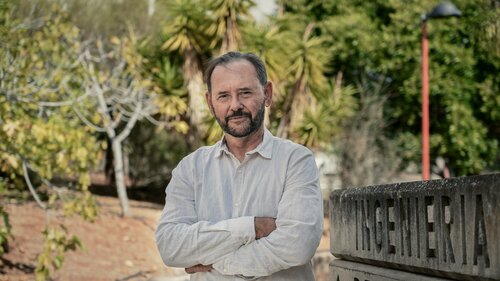
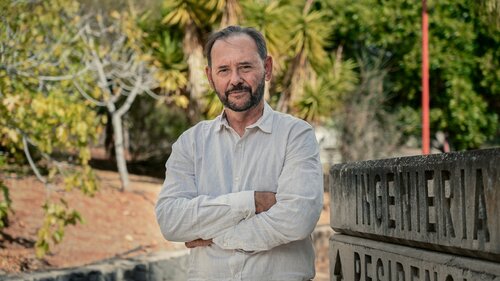
Cover photo: Mirjana Pović, researcher at the Ethiopian Space Science and Technology Institute (ESSTI) and the Institute of Astrophysics of Andalusia (IAA-CSIC). Image credit: Alejandra Rueda (IAC).