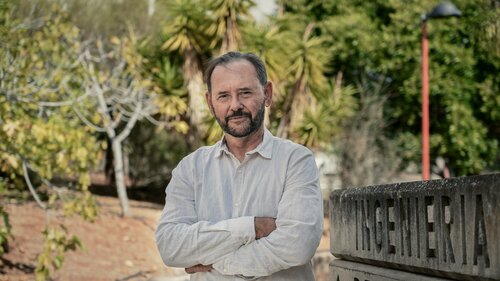
Dr. Cosmic Ray
With Tijana Prodanović, a TikTok professor better known as Dr. Cosmic Ray, we talked about science communication for young people on social media and public trust in science.
02. Apr 2023

Today's guest is Tijana Prodanović, an astronomer and astrophysicist, professor of astronomy, and science communicator from Serbia. Tijana, thank you for joining us. Could you first explain why you are known as Dr. Cosmic Ray?
Thank you for the invitation! I listen to your podcast and I'm happy to be your guest today. Dr. Cosmic Ray is my secret artistic name. By day, I'm an astrophysicist, and by night, I'm Dr. Cosmic Ray. Cosmic rays have been the central focus of my research ever since my doctorate. Most of my research work focuses on cosmic rays, nuclear astrophysics, and particle astrophysics. Recently, right before the outbreak of the coronavirus, I started creating TikToks. I joined the dark side and first used my artistic name for my TikTok channel, and later for Instagram, and that's how people know me by that name now. After everything I've worked on, people now say, "Oh, that's the TikToker, Dr. Cosmic Ray," and they also call me the "TikTok professor."
You are a very passionate astronomer and science communicator. How did your passion start? Did you have any role models?
That is actually not such a happy story, but rather a sad one. I have loved astronomy and space since childhood, and I knew I wanted to pursue science. But science communication wasn't on my horizon at all. One of the more significant events that later influenced this decision was the total solar eclipse in 1999, which was visible from northern Serbia. I was in my second or third year of university. We students organized ourselves and went north. We traveled from Belgrade to Horgoš on the Serbian-Hungarian border to observe the total phase, but most people in Serbia were hiding at home with their window blinds down. The reason was a public announcement with a political background intended to frighten people. It was the time of the bombing in Kosovo, a time of crisis, and people were terrified. They followed the public announcements to stay home and hide. But I thought to myself: "All right, you're scared, I understand, bad things are happening, but where is basic scientific literacy? We are about to enter a new millennium and we are hiding from a celestial event like cavemen!" I found it so depressing, I couldn't believe it. There are still videos on YouTube of empty streets; type in "solar eclipse 1999 Serbia." It was like a zombie apocalypse. I was shocked and truly couldn't believe it, and then I realized that this is our duty, the duty of scientists and teachers. We are the ones who can best educate the public. It's about truly basic knowledge and things that people should know much better. That has stayed vividly in my memory.
"I realized that scientific literacy is our duty, the duty of scientists and teachers. We are the ones who can best educate the public."
When I later started my PhD in the United States, I also experienced a major shift. The teaching style in Serbia is quite conservative, frontal, and old-school. Professors are serious, and there is a distance between them and the students. A student doesn't ask questions, but copies from the board in silence, and usually it's not fun. Things are slowly changing now, but back in my time it was like that—I finished my studies in 2001. When I came to the United States, however, lectures were fun! Both in graduate school for us older students and for undergraduate students. Students learn, but the process is fun and engaging. They are satisfied to be much more involved and to know their professors by name. Even so, they are respectful and they learn. I realized that how you present the material is very important. I was already aware of this beforehand because I was on the receiving end of knowledge myself. I knew things shouldn't be that way, but at the same time, I wasn't sure what they should be like. Is there any other option? When I returned to Serbia in 2006, I started teaching at the university. In 2008, I participated in the FameLab competition, and it was clear to me all along that the way science is communicated really makes a big difference. When I listened to Serbian scientists on television, they sounded boring, vague, and confused, as if it were mandatory to sound very serious and use complicated words. But the public just wants to know what the point of it all is. So that's how I became passionate about science communication. I didn't want the solar eclipse fiasco to happen again. That became my mission.
You mentioned the FameLab competition that you participated in back in 2008. What is this competition about, and why did you decide to participate?
This competition also had a huge impact on me. It actually gave momentum to my second job—the unofficial job of a science communicator. It is a competition organized by the British Council. This is an organization that operates in many countries, including Slovenia and Serbia. They deal with cultural themes, as well as others such as science, communication, and the popularization of science. The British are very good at science communication, similar to Americans; science communication is very well developed in the United Kingdom. They organize the FameLab competition, which is a competition for the best young science communicator. The competition has been organized for many years. They started in Britain and then expanded to other countries. In 2008, the competition took place in Serbia as well. At first, I wasn't thinking about applying, but then I received a call from someone at the British Council. At that time, in cooperation with the national television, they were organizing a science show titled Scientific Coffee, in which scientists participated. For that occasion, I prepared a lecture on dark matter; they still air it sometimes. After the lecture, one of the participants from the previous year's FameLab competition approached me from the audience. She was an acquaintance of my friend and colleague from the University of Novi Sad. She said, "I think you should participate in FameLab because you're really good at it! You have to try!" I didn't like competitions because I suffered from severe stage fright, but then I found out that the finalists receive a professional training course in science communication as a prize. Of course, I really wanted that course, so I entered the competition hoping to place among the top ten finalists. And I made it! The two-day course was exceptional. It was led by Quentin Cooper, who is one of the leading science communicators in Britain. The two-day workshop was truly very good. Then we had the finals, and I won the national competition. After that, I participated in the international level of the competition, which was held in Cheltenham, Britain, and I took second place there. That year, a friend and colleague from Croatia, Marko Košiček, won. We had another professional course in Cheltenham, which I was very happy about. In the end, I received two intensive courses in science communication. Following that, in 2009, I co-organized the first science festival in Novi Sad.
Tijana mentions the FameLab competition, which is widely recognized around the world, but it is certainly not the only one of its kind. In Slovenia, for example, Znanstveni slam (Science Slam) has been running since 2016, organized by the Znanost na cesti (Science on the Road) institute.
In this event, young scientists present their research through short, popular-science talks to an audience that then votes for the winner. The experience is mutually engaging: the audience learns something new about the researchers' work, while the participants distill their knowledge into an entertaining and accessible presentation of just a few minutes, often using creative props or live experiments.
In one interview, you said that for fifteen years you explained to people how we still haven't found extraterrestrials, but in your new job you are now creating their movie depictions. You are an astrophysicist, but now you've shifted to a different topic. What are you working on now, and what attracts you to it the most?
I am still a scientist. Once a scientist, you stay one forever. But two years ago, I completely changed my career. I left the university. I'm still connected to them, I still teach at the University of Belgrade, but my main job is now at a startup dealing with data science, more specifically computer vision. How is such a leap possible? I always tell my students that when preparing a doctorate, doing science, and maturing into scientists, it's not so much about the actual research topic. Their superpower and the main skill they learn is problem solving, how to tackle problems, and how to handle data. In the end, it's always about data. Computer vision is not so different from astronomy. All you get are images, through which you try to understand the 3D world.
How did you end up on TikTok as an astronomer?
Memes about this are circulating on Twitter. One such example is a physicist who looks boring and an astronomer all dressed in colorful feathers. Astronomy is the best way to "sell" physics, and that is actually what I do: by talking about the universe, I promote physics and mathematics.
I have participated in many science festivals and workshops, even for kindergarten children. I also have two nephews. Children are interested in two things: outer space and dinosaurs.
Dunja: I completely agree with that! [laughter]
Later on, of course, they become interested in other things too, but you have to maintain that interest in space. Through that, we can educate them and prepare them for scary physics and mathematics—well, they aren't scary, but schools usually make them that way. We introduce them to this topic and repeatedly expose them to space. Mathematics and physics are just tools, but we are learning about the universe.
Three years ago, we organized Researcher's Night, and at the same time, we had a desire for a greater online presence. Researcher's Night is a big event. Around twenty thousand visitors come, which is huge. We prepare practical experiments, but nowadays we need to create more online content. I realized that TikTok is a wonderful space for presenting all this elegant and shiny space science, and so we decided on it, also because most kids use it today. At first, I wanted to invite influencers to present a science challenge on TikTok. I found someone who agreed to cooperate, but then I told myself I could do that too—maybe even better. After all, this is what I do; I know how to "sell" science. It sounds a bit ugly, it's not really selling, but you know what I mean.
Shortly after that, I created a TikTok video. I have a great tool called Makey Makey, which is similar to Arduino. It's a small motherboard that you plug into a computer via USB. On the other end is a cable you can connect to anything that conducts electrical current. You can connect it to fruit and use it to play music, or as a keyboard. Five people can hold it and play a melody together. When they close the circuit and tap on it, the computer produces sound. I used this very effective demonstration for my first TikTok, and a surprise followed. Suddenly I had ten thousand views, even though I had barely opened this channel and had no followers. I realized the reason was their algorithm and paid attention to how it works. That is what makes TikTok different from other social networks. I've had Facebook from the very beginning, since I was in the United States when it was created. But now that's more for old people [laughter]. I follow friends, keep track of what they're doing. Instagram? That never appealed to me. What on earth am I supposed to do with pretty photos? That's not for me. TikTok, on the other hand, is more interactive: someone does something, and the rest watch. I know people work hard on Instagram and YouTube to grow their views and gain followers. I thought about YouTube, but then I would have to devote a huge amount of attention to video editing. Today's videos look as professional as TV shows and you can't just post absolutely anything. I never had time for that. On TikTok, however, videos are shot with a phone in hand and show people doing pretty much anything, almost in their pajamas. Without demanding video editing, you get thousands of views because of the algorithm.
I watched my nephews interact with TikTok. The two main categories are For You and Following. On TikTok, you don't browse videos from your friends or subscribed channels, unlike on Facebook and Instagram, for example. TikTok displays videos suggested by the algorithm. That's in the For You category, and everything revolves around that. I wondered what the hashtag #foryou is, which designates this category. Its role is to convince the algorithm to present your video to more users. I delved into its details. The good side of TikTok is that the algorithm always plays a mix of different clips. Some are related to your preferences, but there are always a few that are completely random. If viewers watch and interact with your video for a bit and like it, then TikTok sends the next batch of videos to the next group of users, whose number gradually grows. This is how interesting videos go viral. This happens even if the author of the video doesn't have a single follower. That's great! Later, people wrote to me saying they used to hate physics, but then they saw my videos. That's good, because those people would never search for content like physics. But this way, they kind of stumbled upon my video. Maybe at first they didn't even realize it was physics, because it's about the fun universe. They liked it and only later realized it was physics. That's why I think TikTok has huge potential for educational purposes. Sometimes you come across videos you didn't even know you'd like, whereas on YouTube you have to know what you're looking for.
Tijana talks with us about the potential that TikTok has for spreading scientific content. However, TikTok is also a platform that has been widely discussed recently, primarily due to data security. TikTok is extremely popular and widely used among young people in Slovenia as well. It even ranks second among primary school students and third among high school students among the most popular and used applications. TikTok was just recently discussed in the mini-series Odbita do bita, prepared by Maruša Kerec and Anže Tomić. In this series of episodes, they discussed the app's security with Gorazd Božič, head of the National cyber security incident response center SI-CERT; misinformation with Nejc Slukan from the Faculty of Social Sciences; and the digital habits of young people in Slovenia with Katja Koren Ošljak, a researcher at the Faculty of Social Sciences and founder of the Zavod Vsak institute, which focuses on children's digital education. You are invited to listen to them as well.
Who is your audience, and what are the most common questions you get on TikTok?
The audience is definitely young. TikTok has demographic data, but the lowest age shown is eighteen. But we all know that most users are under eighteen. I don't have data on an older audience. They probably exist, they're just not as visible.
What do they ask? I love their questions. I have my own category of TikToks called WWYIF ("What would happen if...?"). These are very valuable questions that you don't usually get in a classroom. What would happen if the Sun stopped shining? What if the Earth stopped rotating? What if the Moon disappears? What if the entire planet were made of water? They ask a ton of "what if" questions that are invaluable for showing them functional knowledge. When they learn something in class, they look at it through school examples; for instance, with friction and gravity, we all use the same examples. But now we have a completely new situation where we can show them how to apply the knowledge they acquire in various fields to unknown situations. Let's look at an example: the Earth rotates. What does that affect? Let's think about what happens if you suddenly stop something that is rotating. This is an opportunity to guide your audience through logical reasoning and problem-solving in unfamiliar situations and hypothetical scenarios.
I also have a category of TikToks that I named Alien Detectives, which the audience loves. It's based on clips from movies. I started creating this series because I love science in movies. I really love movies, and now I even work in a company that makes them. All the time I think about what is good and bad science in movies. I even enjoy movies that contain scientific errors. They're just fun to watch, but sometimes I put on my scientist hat and consider whether something is good or bad. For example, I prepare presentations on the science in Superman and also TikToks about that. In the Alien Detectives series, I choose a well-known alien and reason about what its home planet might be like based on what we know about it from its appearance. Take the alien from the movie Alien, the Xenomorph, for example. Its blood is acid, so maybe it could be from Venus. If acid rains there, it's better to be used to acid being everywhere. It's about logic. If it's blind, maybe there's no sun there, maybe it lives underground. Is it green, deaf, does it have big eyes? I make things up, but I try to make them sensible. For example, if an alien is tall, maybe it comes from a smaller planet with weaker gravity.
Do you think that TikTok could change the way people think and their view on astronomy and science?
Of course, regarding science, I am convinced. However, it's a double-edged sword, because you can also spread misinformation. Daily, I get tagged in videos that users find suspicious or don't understand, and they ask me about them. What they see, they verify with someone they trust. One of my former students is also a TikToker and has many more followers than I do. She is closer in age to her followers, so it's peer-to-peer learning. Her followers, who don't know me, sometimes tag her under my videos and ask her if what I said is true. That's fine! After all, "Who is this random person explaining something that might not even be true? Better check with someone I trust." I like that they verify information. This gives us an opportunity to make a change. Sometimes they have questions and don't know who to turn to, but now they have that option. On the other hand, I might come across a video where someone is wondering about something, and then I can respond. I think TikTok's educational potential is truly underestimated.
As you mentioned, one of the ideas is also to teach the audience never to fully believe everything they hear, but to verify it with someone they trust.
This gives me hope. When I look at the younger generation on TikTok, I see that they aren't as lost as we think, or as older people imagine. They verify facts, they are grounded, and they are aware that a huge amount of things on Instagram are fake. To help them, we just need to give them the tools and show them good ways to verify facts.
Speaking of fact-checking tools, do you happen to have any news you'd like to share with us? [laughter]
Yes, of course [laughter]. I'm thinking of finally starting to create a podcast. We still haven't decided what we're going to call it. A lot of my TikToks are about news topics that viewers tag me under and ask if they are true. I also notice news stories that contain errors myself, and I think it's time to start creating a podcast where we would cover scientific news on a monthly basis. We would talk about the science behind them. On TikTok, I only prepare a few-minute clips, but I'd like to dedicate more time to the news. At the same time, the other side of the podcast will be the development of critical thinking and discussions about how we break down information we find online, whether we can trust it, how we can verify facts, and how to find sources. I hope we'll start this podcast as early as this month.
Welcome to the family!
Thank you, we'll definitely ask you for some advice! You are professionals, and I am a beginner.
You described how young people trust their sources. Do you think there is a likelihood that they might also turn to unreliable sources or influencers of dubious reputation?
Yes, that's true, very true, so we have to go into their arena, where they are. I preach to my colleagues: "I know we're old, but we have to be on TikTok!" Kids want to learn, but we have to offer them some other authorities; sources they can trust. Times have changed regarding who your trusted source of information is. In the past, it used to be news, books, classrooms, the university, scientists, and experts. But now, in the internet age, anyone can be an expert and can even have a huge impact and view count. We all know that writing books and articles takes time. You do the research quickly, but you write articles for an eternity. That is the most boring and monotonous work, but it has to be done. That is how you create trusted sources that are verifiable at the same time. On the other hand, writing a blog or filming a video that you post on YouTube takes only a few minutes. You can write anything, and people do it. They write untruths and that is why we have a rise in pseudoscience and fake science. Some even dedicate themselves to spreading conspiracy theories and don't even pretend to be scientists. What they all have in common is that they are very loud and very active in the public arena. On the other hand, we scientists are not present there. We are not as loud and we don't go public as easily. We prefer staying locked in our laboratories, classrooms, offices, but now it is up to us to go out.
"We scientists are under great pressure to produce results; we often tell ourselves 'publish or perish.' Science communication thus often feels like a waste of time, and that was also my experience at the university. Public engagement and explaining science is simply not valued enough. If we don't do this, people will find their trusted sources in those who are the loudest and who know how to sell it. They usually rely on fear and play the emotional card; there is a lot of psychology behind that. If we are not there to offer the other side, science will become less and less visible."
Learning science from books and scientific papers is hard and isn't meant for everyone to do. But someone needs to be there to bring science closer to people. We scientists struggle to accept the idea that trust isn't just automatically handed to us. We are the experts—why don't they trust us? People don't understand that, and neither do I, but that's how it is, and we have to accept it. We need to get used to the fact that trust has to be earned. That is why those kids were fact-checking my video with my student. At some point, someone realized I was her professor, and someone else replied, "So what!" But that's fine—we have to earn their trust, and that is the big shift. We can only achieve this by being out in public, talking about science, listening to people about their fears and what's on their minds, and engaging with them. That is what science communication actually is. I think that nowadays, science communication is more important than ever before.
Do you think that observing a solar eclipse in Serbia today would be different than it was in 1999?
Yes, times have changed. Recently, we had a partial eclipse and I saw people observing it. I was satisfied and told myself: 'Good, finally!' That's more of a political commentary, which reveals the close connection between politics and science. A Serbian female director made a documentary titled Eclipse, which talks about the political situation in Serbia after the breakup of Yugoslavia. She set the events somewhat between two eclipses. The first happened in the 1960s, and the second, which was a complete fiasco, in 1999. In the 1960s, the Yugoslav government even organized a campaign to teach people how to observe the eclipse; there are even historical recordings about this. In schools, they taught people how to protect their eyes. There was an enormous amount of encouragement to view this beautiful event. In those days, people trusted their government. But the year 1999 was the exact opposite in Serbia. Today, I also compare this to the situation during the outbreak of Covid. We have a rise in anti-vaxxers. In Serbia, we had enough vaccine available early on, but I think only about fifty percent of people got vaccinated. Today, very few people vaccinate their children against measles, rubella, and mumps (the MMR vaccine). I think in Novi Sad, only twenty-seven percent of parents vaccinated their children before the age of two, when they are supposed to receive this vaccine (I'm not completely sure about this age group). That is terrifying!
In the seventies, there was a smallpox outbreak in Yugoslavia. They made the most terrifying movie of all time about this event titled Variola Vera; it's a classic. I knew there had been an outbreak, but I never had anything to compare it to. After Covid, I asked my father how they dealt with it. He said he was scared, but not all that much. None of his acquaintances died. "We were young. We knew we probably wouldn't survive the infection, since the mortality rate was high. But there weren't that many infected." It wasn't clear to me how that was possible. How did the vaccination take place? Yugoslavia at the time broke a record by vaccinating millions of people in a very short time. My father told me that back then, people were literally hunted down on the streets. They vaccinated in schools; they stopped buses and checked whether everyone was vaccinated. If you weren't vaccinated yet, they vaccinated you on the spot without asking questions. I asked him if he didn't find that strange. Wasn't he afraid of the vaccine at all? "No. Why not? Because we trusted the government." And that is the difference. In my opinion, trust in science is strongly connected to how much we trust the government. Trust and science are social topics.
Today we are involved in many scientific topics, we talk about science at every turn. In the end, however, we must know whom to trust and how to interpret scientific news and political decisions on scientific topics.
Today more than ever. What scares me today is, for example, ChatGPT; this is a topic that is also connected to science communication and trusted sources. If I ask it something, the tone with which it answers is very authoritative. It truly sounds like an authority and like someone who knows what they are talking about. I love technology, but I'm not sure how ready we are for it as a society and how ready we are for search engines with built-in ChatGPT. I saw a tweet from a doctor who tested it with a question about treating a specific condition. ChatGPT's answer was very good. It included a reference to a study showing that the proposed medication improved the condition. The doctor replied that he didn't know this medication and asked for a link to the study source. But ChatGPT simply hallucinated and made up that source! I've experienced a similar situation many times myself, and that's scary because it can trick even experts! However, we are experts and we know how to verify information. We try to at least be aware of our blind spots and the fact that we are biased ourselves and must check ourselves as well. The problem is that the average user doesn't have sufficiently developed critical thinking skills to use the described tools in a way that doesn't cause harm. I'm a bit scared about that. Even today, we have a huge amount of work in science communication and fighting pseudoscience and misinformation. With ChatGPT, it might be even harder because it is familiar with material from the entire internet. You can find all sorts of things there, and ChatGPT is just a statistical tool. It doesn't provide references, but merely presents information that someone found who knows where.
Presence in the arena with ChatGPT will be very difficult.
Yes, truly.
We have reached the end. Tijana, thank you for joining us, and good luck with your new podcast!
Thank you for the invitation.
You can listen to the original conversation here.
Source of the cover image: Netokracija.